Corrugated Box Inline Production Lines: Advantages and GIANT's Solution

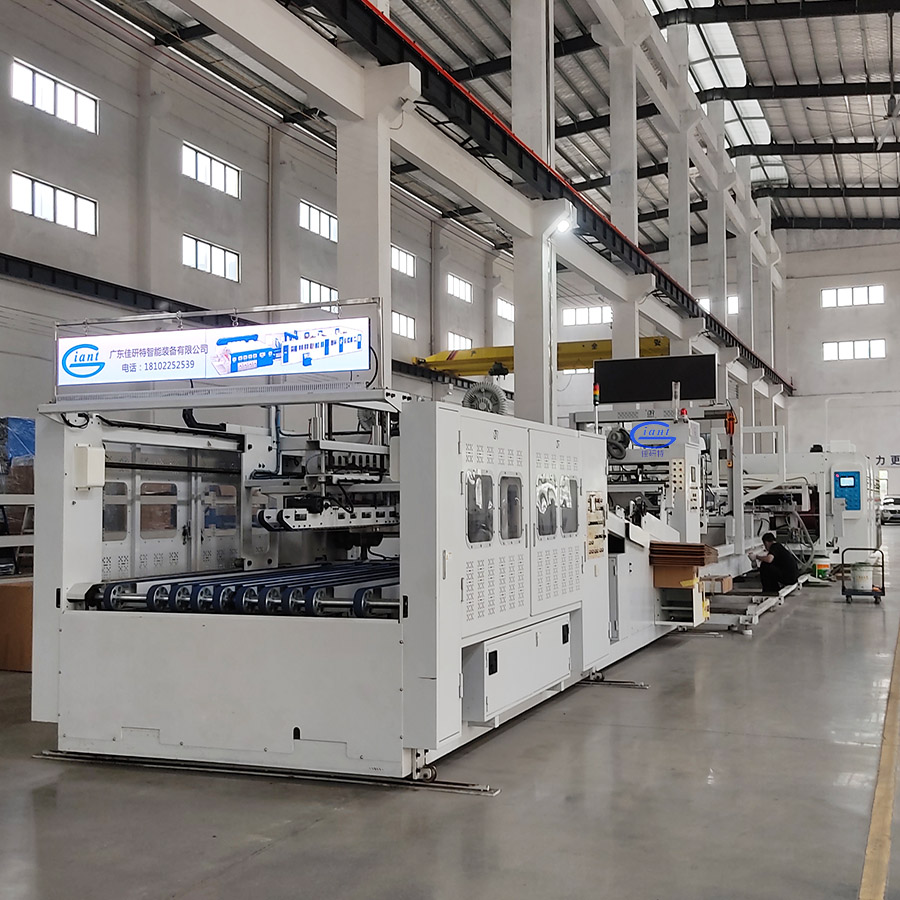
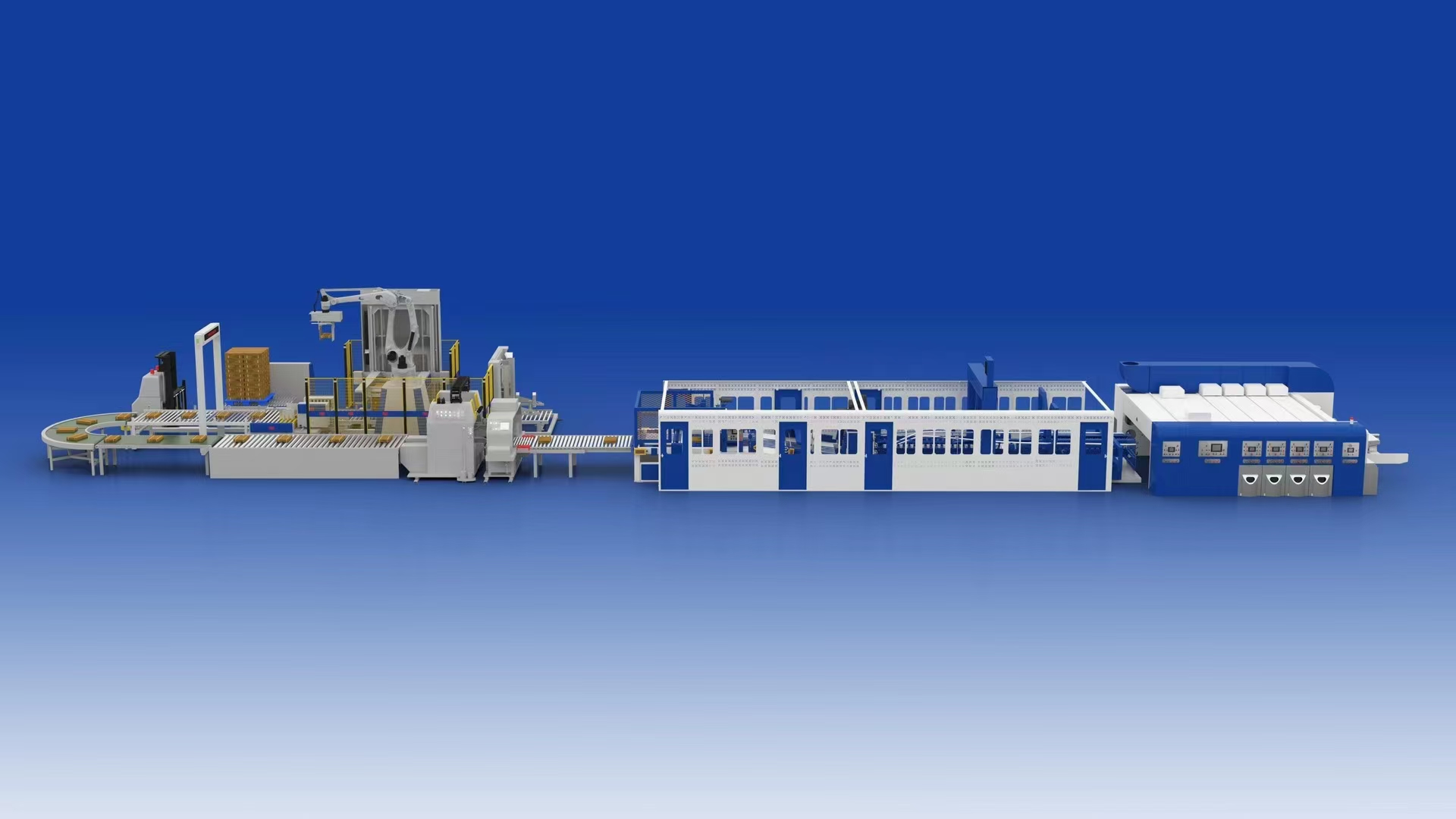
In the post-press section of corrugated box production, inline production lines are attracting increasing attention from box plants. By integrating printing, slotting, die-cutting, and stitching/gluing into a single automated production line, they are regarded as key equipment for modern box plants seeking to improve efficiency and quality. However, an inline line is no "cure-all"—its strengths are distinct, and so are its limitations. What GIANT does is precisely this: fully inheriting all the advantages while resolving each of the limitations one by one.
I. Where Exactly Does an Inline Line Excel?
Efficiency is the most intuitive advantage. With seamless connections between processes, the time wasted in single-machine production—repeated handling, stacking, and positioning—is eliminated, and the production flow runs continuously. Modern inline lines can reach speeds of hundreds of meters per minute, producing a complete box in just seconds—far exceeding the output of a combination of standalone machines.
Labor costs drop significantly. An inline line typically requires only 2–3 operators to do the work that would otherwise take 10–20 people running multiple standalone machines. Dependence on skilled single-machine operators is reduced, and management and training costs fall accordingly.
Quality also benefits. Because printing, slotting, and die-cutting are completed in one pass and the board's position is fixed throughout transport, registration between processes is highly precise. Meanwhile, the bumps, creases, and smudges caused by repeated loading and unloading in standalone production are avoided, resulting in a higher yield.
Digital management is another plus. Inline machine are usually equipped with a central control system that can store and manage large volumes of order data for rapid shift changes, while monitoring production speed, waste rate, and order completion progress in real time—providing data support for production management.
Floor space is used more economically. The functions of multiple standalone machines are integrated into one compact line, requiring less floor area than separate machines.
II. The Real Limitations of Inline Lines
Beyond the advantages, the barriers to inline lines cannot be ignored.
High investment cost is the primary issue. A mid-to-high-end printer gluer inline machine can cost several million to over ten million RMB, posing considerable financial pressure for small and medium-sized box plants.
Order structure matters. The advantage of an inline printer gluer lies in stable, long runs; it suits large-volume orders with uniform specifications. Frequent shift changes reduce efficiency due to setup and debugging time, and flexibility for very small batches and rush orders is lower than that of standalone machines.
Technical complexity and high maintenance requirements. An inline printer gluer is a highly integrated mechatronic product, demanding a high technical level from operators and maintenance personnel. A failure in any single link can halt the entire line, and both repair costs and downtime losses are significant. In short, "one moving part affects the whole"—problems in any link, such as ink-water balance or die-cutting depth, will affect final product quality, and tracing the source requires more experience.
III. GIANT: Inheriting the Advantages, Resolving the Limitations
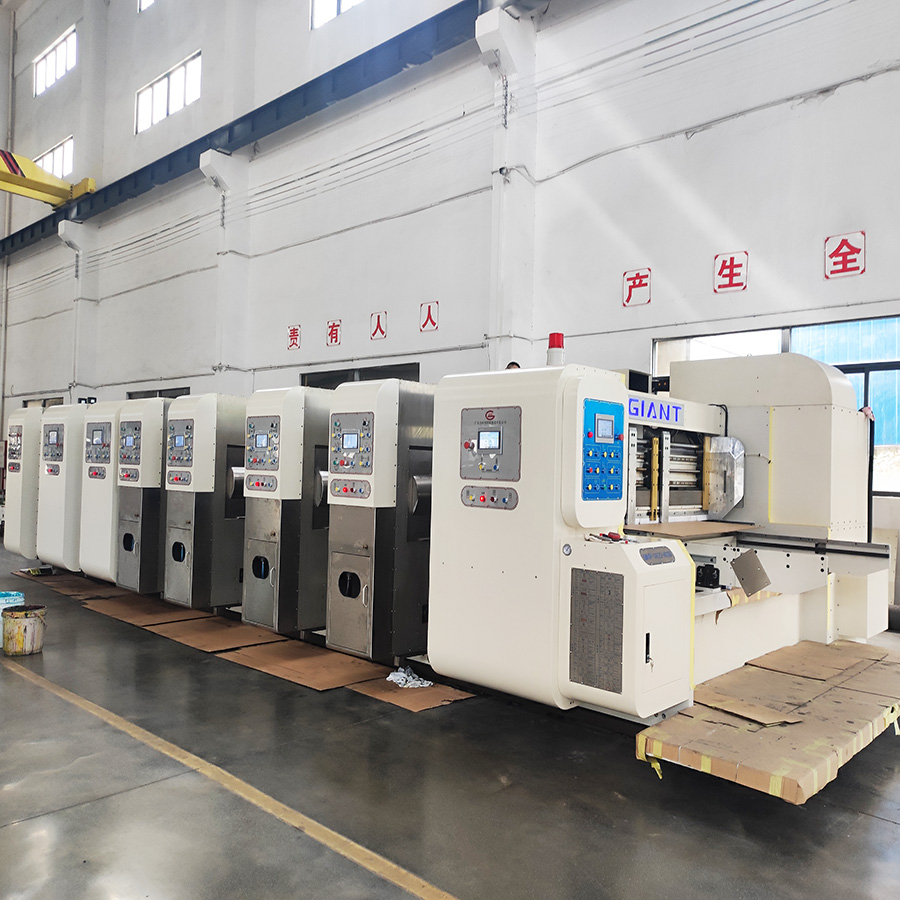
Faced with these pros and cons, GIANT's approach is clear: maximize every advantage an inline Printer gluer should have, and resolve each limitation that constrains customers' choices, one by one.
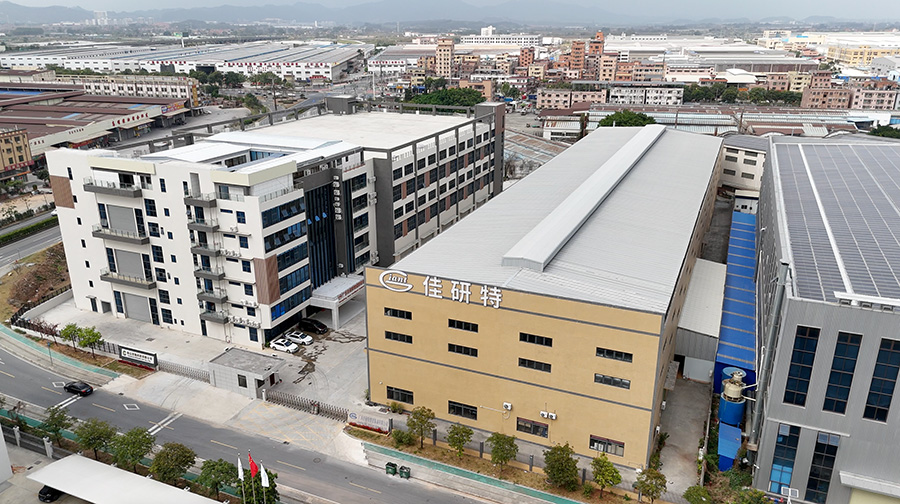
First, the cost barrier is greatly lowered. GIANT is currently the only factory in China manufacturing corrugated flute stitching inline lines, inheriting 50 years of Korean technology—previously, stitching machines were all produced in Korea, and now the production technology at the domestic factory is fully mature, bringing costs down significantly. The prohibitively high investment of the past is no longer a major issue.
Second, rush orders and small batches are equally manageable. The stereotype that inline machine "fear job changes" is rewritten at GIANT: on one hand, production frequency is extremely high, reaching 380sheet/min; on the other hand, a sheft change takes only 3–5 minutes. High-frequency operation plus ultra-fast changeovers allow small batches and rush orders to be completed efficiently on the inline printer gluer as well.
Third, maintenance is no longer "out of reach." GIANT equipment has extremely low maintenance costs—most faults can be resolved remotely online by technical personnel without frequent on-site visits—and an equipment service life of up to 35 years, making long-term cost of ownership more advantageous.
Conclusion
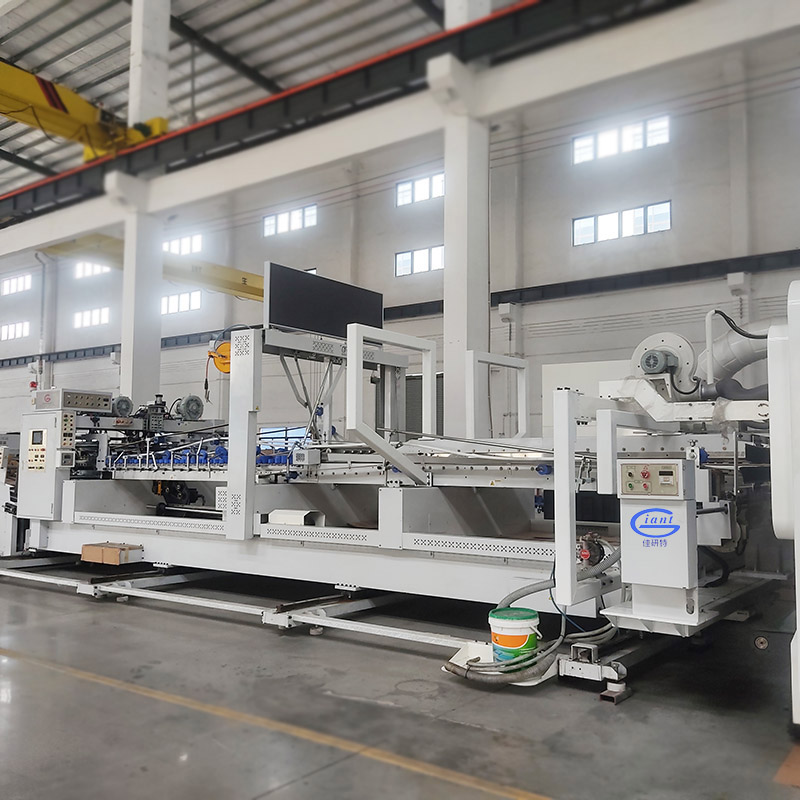
The value of an inline Printer Folder Ggluer lies in connecting printing, slotting, die-cutting, and stitching/gluing into an efficient, precise, and manageable production chain; GIANT's value lies in freeing that chain from high investment, slow changeovers, and difficult maintenance. For box plants evaluating post-press equipment upgrades, a solution that inherits all the advantages of an inline line while resolving its real pain points may well be the choice most worth serious consideration today.